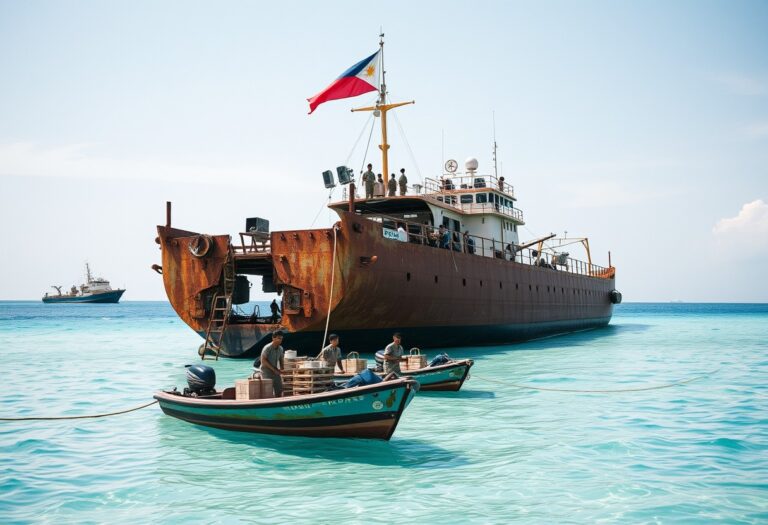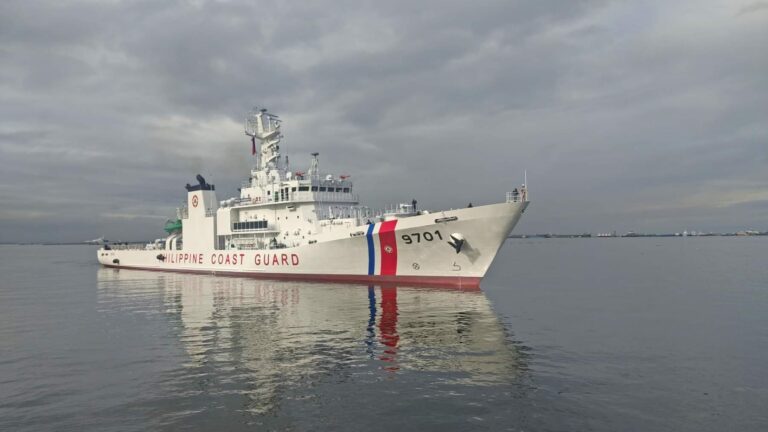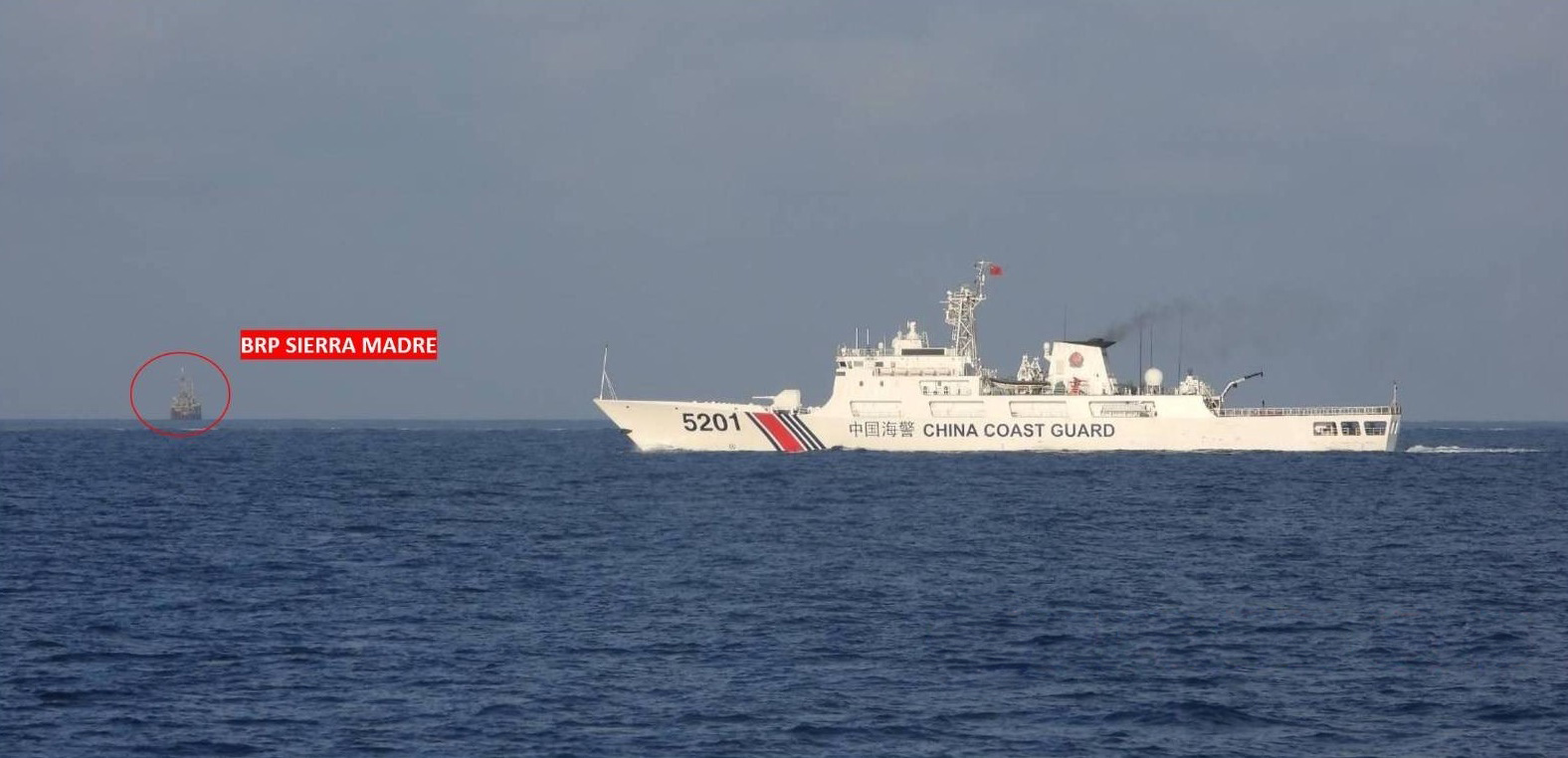
File photo: CCG vessel near Ayungin (Second Thomas) Shoal. Philippine Coast Guard / Wikimedia Commons (public domain).
News reporting — West Philippine Sea / Defense
The Philippines’ latest rotation-and-resupply (RORE) run to the grounded BRP Sierra Madre (LS57) at Ayungin Shoal never reached its destination. About 60 nautical miles out, a swarm of Chinese vessels closed in Thursday night — and Manila’s commanders pulled the plug rather than risk a collision at sea.
According to The Philippine Star, some 15 Chinese vessels shadowed the convoy between roughly 8:35 p.m. and 11 p.m. The mix: one People’s Liberation Army Navy (PLAN) warship, five Chinese maritime militia ships, and nine China Coast Guard (CCG) vessels, pressing against civilian supply boat M/V Lapu-Lapu — itself escorted by three Philippine Navy and Philippine Coast Guard ships.
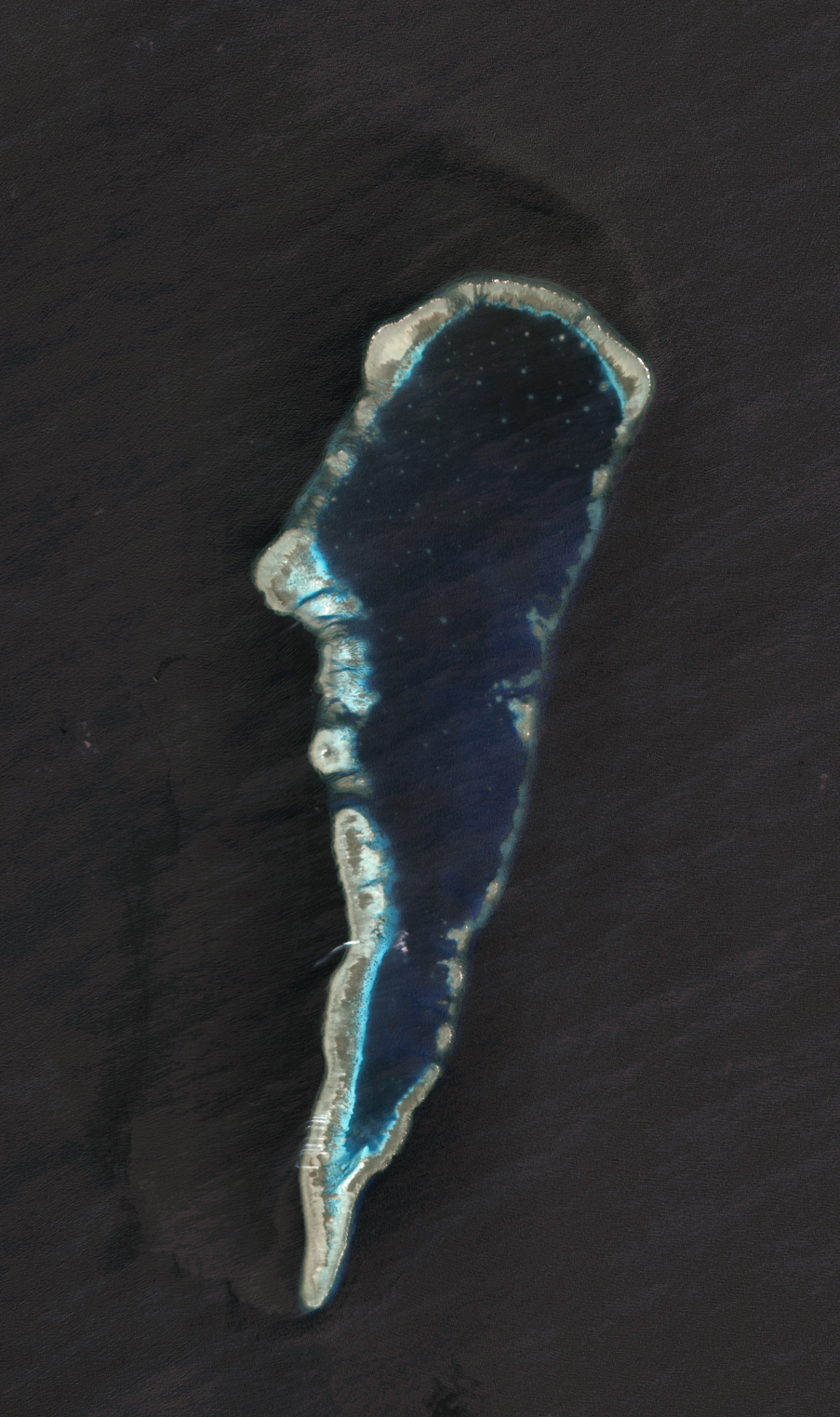
Radio challenge, close maneuvers, then abort
PCG spokesman for the West Philippine Sea Rear Admiral Jay Tarriela said the mission was discontinued at around 11:08 p.m. over safety concerns. A PLAN warship, he said, issued a radio challenge warning it would take “compulsory measures” against the resupply. CCG vessels shadowing Lapu-Lapu made a maneuver of nearly 1,000 yards — close enough to raise a real collision risk. The PCG’s BRP Malabrigo, deployed for security assistance, was also shadowed.
AFP West Philippine Sea spokesman retired Rear Admiral Roy Vincent Trinidad framed the night carefully: Chinese forces did not “technically block” the ships in a hard sense, but monitored them, drove them away, and kept inching closer — “from miles until yards.” The abort, he said, was the unified commander’s judgment call to avoid escalation.
“These actions are irresponsible, are reckless and are inconsistent with applicable provisions of COLREGs and UNCLOS, as well as the Philippines’ rights affirmed by the 2016 Arbitral Award,” the AFP said, as reported by Philstar.
NTF-WPS: sustainment of Sierra Madre hindered
The National Task Force for the West Philippine Sea (NTF-WPS) condemned the interference with a lawful RORE meant to deliver essential supplies and rotate personnel aboard BRP Sierra Madre. Chinese CCG and PLA Navy vessels, the task force said, put Filipino personnel at risk and obstructed a legitimate humanitarian and sustainment operation — conduct it called inconsistent with UNCLOS and the 2016 Arbitral Award affirming Philippine sovereign rights and jurisdiction in its exclusive economic zone, including Ayungin.
Trinidad said a new RORE will depend on the unified commander’s contingency plans. The AFP does not treat China’s radio messages as legitimate “challenges” over waters Manila considers part of its EEZ.
Provisional understanding is not a permission slip
The episode lands against the backdrop of Manila and Beijing’s earlier provisional understanding on Ayungin resupply. The Department of Foreign Affairs — including Secretary Ma. Theresa Lazaro speaking in New York on maritime cooperation — has stressed that the Philippines does not seek China’s permission to sustain its outpost, nor does any understanding hand foreign vessels jurisdiction over Philippine operations in the West Philippine Sea.
For readers watching the map: Ayungin remains a forward Philippine position. Shadowing at 60 nautical miles, radio threats of “compulsory measures,” and near-collision CCG approaches are not routine traffic management — they are pressure tactics against a sustainment mission. Manila’s line is clear in the record: sovereign rights under UNCLOS and the 2016 award stand; crews’ safety comes first; the next RORE is not canceled, only delayed.
Sources: The Philippine Star (Sept. 26, 2026), “China blocks Ayungin resupply mission anew”; AFP / PCG / NTF-WPS statements as reported; Manila Times AFP interference coverage.
About the Author