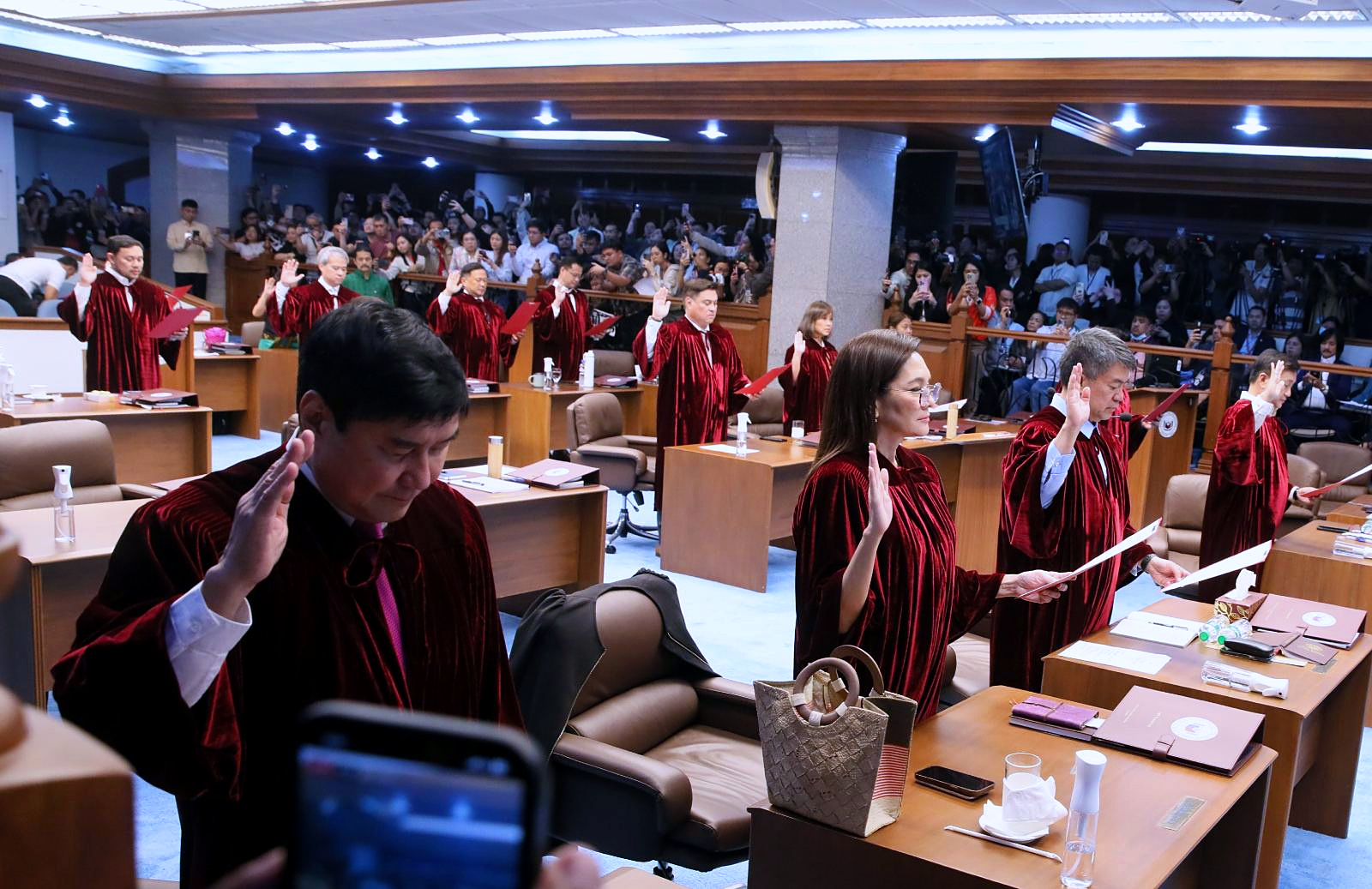
The Senate Impeachment Court is scheduled to proceed today, Monday, September 28, from 10 a.m. to 3 p.m., unless the Supreme Court issues a temporary restraining order or status quo ante order that would halt the proceedings.
That calendar matters. For millions of Filipinos watching how power is checked—and whether the rules apply evenly—today’s session is less about spectacle than about process: who decides, under what standard, and whether the court of impeachment can do its work without being frozen midstream.
What the Senate says
Senate spokesman Reginald Tongol said the Impeachment Court will move forward on the set schedule unless the Supreme Court acts. The Senate, he indicated, has not received official notice of the petitions filed against the chamber’s September 23 voting-threshold ruling.
That detail is not a technicality. Until an official notice and a restraining order arrive, the Senate’s position is that the trial calendar stands. In constitutional fights, paperwork and timing often decide the day as much as argument.
The petitions before the Supreme Court
Two petitions—filed by Atty. Victor D. Rodriguez and Atty. Ernesto Francisco—challenge the Senate’s September 23 ruling on the voting threshold that governs the impeachment proceedings against Vice President Sara Duterte.
The petitions ask the Supreme Court to intervene on that threshold question. Whether the High Court will issue a TRO or status quo ante today remains the open variable hanging over the Senate’s calendar.
What is clear from the Senate side is narrower: no official notice of those petitions has reached the chamber yet, and absent a Supreme Court order, the Impeachment Court intends to sit.
OSG to represent the Impeachment Court
The Office of the Solicitor General will represent the Impeachment Court in the Supreme Court litigation. That assignment puts the government’s chief counsel on the side of defending the Senate’s institutional posture as the trial body—another signal that the fight is as much about institutional roles as about the Vice President herself.
Why process clarity matters
Impeachment is a political trial wrapped in constitutional rules. Supporters of Vice President Sara Duterte—and readers who care about fairness—want those rules applied without ambush: clear thresholds, clear notice, and a court that is not jerked back and forth by last-minute paper wars.
Critics of the Vice President want the trial to proceed without delay. Both camps, if they are honest, have a stake in knowing whether Monday’s session is live or locked.
Today’s window—10 a.m. to 3 p.m.—gives the country a concrete checkpoint. Either the Senate sits and the trial moves, or the Supreme Court steps in and the calendar stops. Until one of those things happens in writing, the Senate’s announced plan is to proceed.
What to watch next
- Whether the Supreme Court issues a TRO or status quo ante before or during the Senate’s Monday session;
- Whether the Senate receives official notice of the Rodriguez and Francisco petitions;
- How the OSG frames the Impeachment Court’s defense of the September 23 voting-threshold ruling.
For now, the public instruction from the Senate is straightforward: the Impeachment Court proceeds today unless the Supreme Court says otherwise. That is the process clarity Filipino readers deserve—and the standard by which Monday’s developments should be judged.
Reporting based on Manila Times coverage by Catherine S. Valente (September 27, 2026).
About the Author