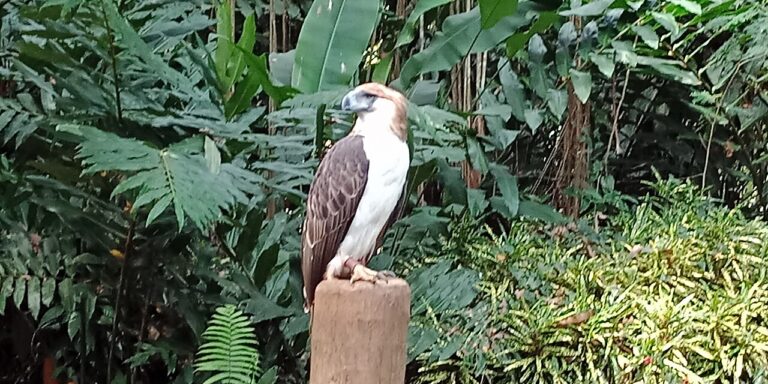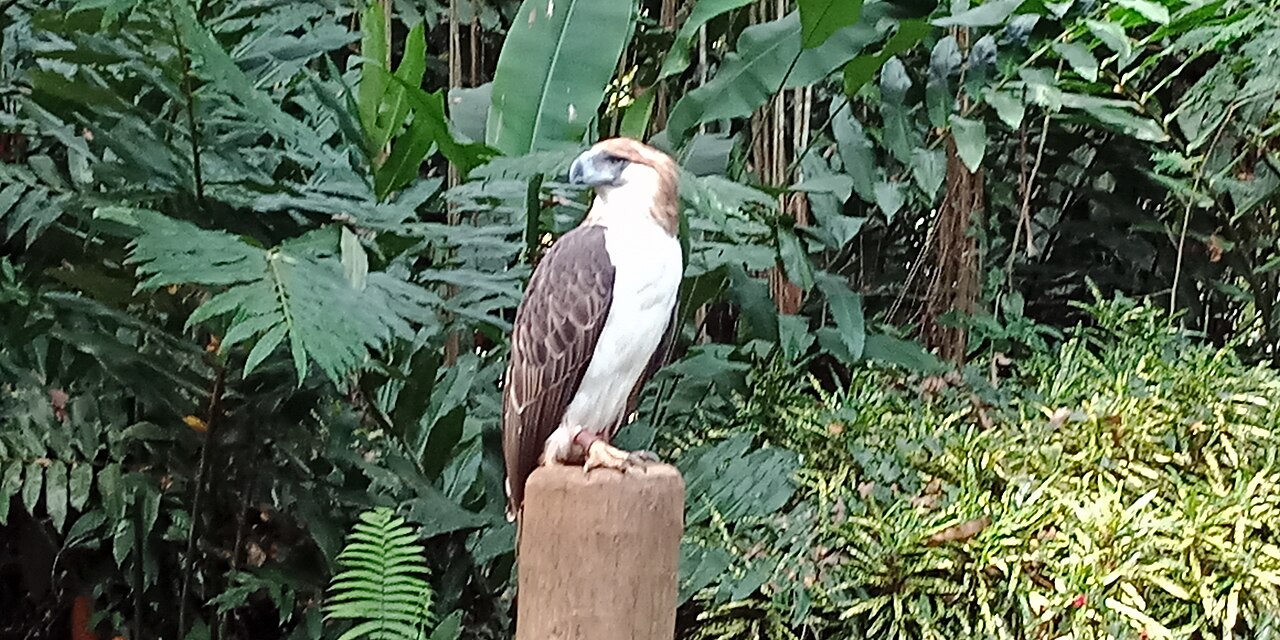
Photo: RoyKabanlit, CC BY-SA 4.0, via https://commons.wikimedia.org/wiki/File:Philippine_Eagle_at_the_Philippine_Eagle_Center_001.jpg
Last checked: November 28, 2026. Every fact below is linked to at least two public sources, or labeled with the one source it comes from.
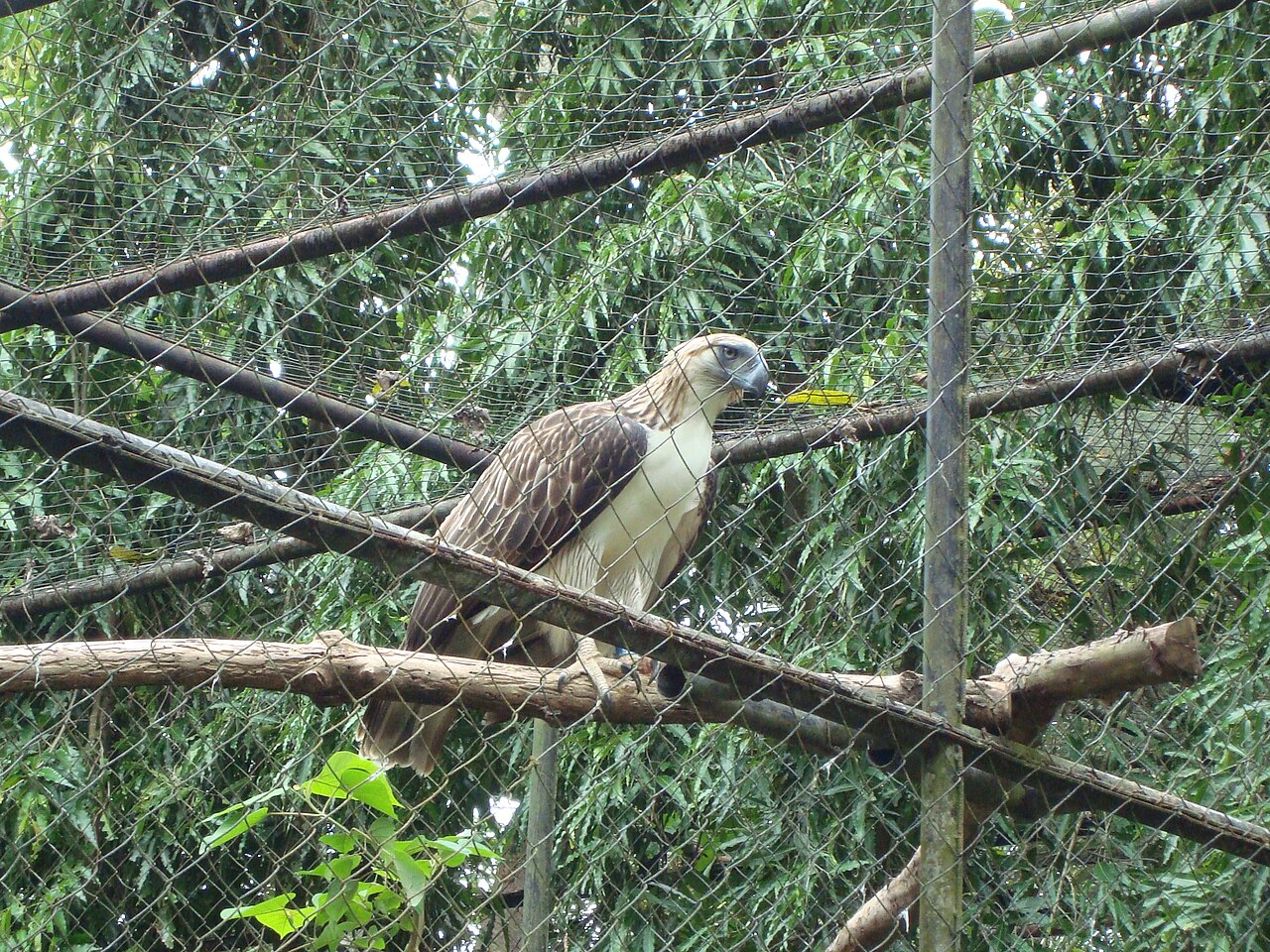
In short: The Philippine Eagle Center in Malagos, Baguio District, Davao City, has become the first zoological facility in the Philippines to receive the Animal Welfare Certificate of the Southeast Asian Zoos and Aquariums Association (SEAZA). The certificate was handed over at the 34th SEAZA Conference in Cebu City, held November 15 to 20, 2026 (Mindanao Times; Philippine Eagle Foundation). It is the place where the first Philippine eagle ever bred in captivity hatched in 1992, and you can visit it for ₱150. Here is the story, and how to go.
A first for Philippine zoos
SEAZA is a group of zoos and aquariums in the region that works on animal welfare, biodiversity conservation and public awareness. The Philippine Eagle Foundation (PEF), which runs the center, said the certificate recognizes the center’s commitment to proper care and good welfare standards (Mindanao Times; PEF).
“Animal welfare means more than giving animals food and shelter. It also means providing suitable living spaces, proper health care, opportunities to move, and activities that allow animals to show their natural behaviors,” the foundation said in a statement quoted by Mindanao Times.
At the same conference, PEF Executive Director Dennis Joseph Ilustre Salvador gave a keynote on how passion, partnerships and new ideas help protect the national bird, and PEF biologist Julia Lynne Allong presented the Leyte reintroduction program she leads (per the PEF).
Where Pag-asa was born
The center’s most famous story is Pag-asa, Tagalog for “hope”. He hatched on January 15, 1992, at the Philippine Eagle Center in Malagos, the first Philippine eagle bred and hatched in captivity, after years of work by the foundation’s team (Wikipedia; GMA News). He died on January 6, 2021, at age 28 (Philstar; Rappler).
Three years after Pag-asa hatched, President Fidel V. Ramos declared the Philippine eagle the national bird through Proclamation No. 615, dated July 4, 1995 (Lawphil; Wikipedia). The species is found only in the Philippines and is listed as critically endangered (Wikipedia; NewsExpress).
Beyond Davao: Leyte and Cotabato
The foundation’s work reaches past the center. In Leyte, where the eagle had disappeared after Super Typhoon Yolanda, two eagles, Carlito and Uswag, were released in Burauen in June 2024 and three more followed in 2025, part of an initial 16-eagle plan (Opinyon; PEF). A study in the June 2026 Philippine Journal of Science, by UP Diliman and PEF scientists, mapped 10,320 hectares of Leyte forest as potential habitat (Opinyon).
Back in Mindanao, PEF met Cotabato provincial officials in Kidapawan City on November 13 to push a Provincial Philippine Eagle Species Action Plan, including a province-wide power line retrofit with the Cotabato Electric Cooperative to keep eagles from being electrocuted (NewsExpress; Manila Bulletin via Headlinne). The move followed two cases in October: an eagle that died after touching a power line in Arakan, and another rescued with pellet wounds in Magpet, according to NewsExpress.
Milestones at a glance
| Year | Milestone | Sources |
|---|---|---|
| 1992 | Pag-asa, the first captive-bred Philippine eagle, hatches at the center in Malagos | Wikipedia, GMA News |
| 1995 | Philippine eagle declared the national bird (Proclamation No. 615) | Lawphil, Wikipedia |
| 2021 | Pag-asa dies at 28 | Philstar, Rappler |
| 2024 to 2025 | Five eagles released in Leyte | Opinyon, PEF |
| 2026 | First SEAZA Animal Welfare Certificate for a Philippine zoological facility | Mindanao Times, PEF |
How to visit the Philippine Eagle Center
- Where: Malagos, Baguio District, Davao City 8018. Phone +63 917 708 9084 or +63 82 324 1860 (PEF). The center is on the outskirts of the city, so plan your ride (Belka travel guide).
- Entrance (Mabuhay Tour): ₱150 per adult, with separate ticket types for kids aged 4 to 17 and for seniors and PWDs, who must show their ID on arrival (PEF booking page; Ren Calago travel guide).
- Guided “Into the Wild” tour: 45 minutes, from ₱120, booked on the foundation’s site (PEF; Belka).
- At the gate: visitor guides report a separate environmental fee of about ₱5 per adult before the main entrance, so bring small bills (Belka; Ren Calago).
- Hours: one travel guide lists 8 a.m. to 5 p.m. daily (Ren Calago). Call the center to confirm before a holiday visit.
Planning a Davao trip over the holidays? See our Malagos Chocolate feature for a Davao pasalubong idea, the DepEd Christmas break 2026 dates if you are traveling with kids, and the 2027 long weekends for your next trip.
TPW is not paid by the Philippine Eagle Foundation, and this article has no affiliate links.
Frequently asked questions
Where is the Philippine Eagle Center?
In Malagos, Baguio District, Davao City (PEF; Belka).
How much is the entrance fee at the Philippine Eagle Center?
₱150 per adult for the Mabuhay Tour, with separate rates for kids aged 4 to 17 and for seniors and PWDs. Visitor guides report a small environmental fee at the gate.
What award did the Philippine Eagle Center get in 2026?
The SEAZA Animal Welfare Certificate, presented at the 34th SEAZA Conference in Cebu City, November 15 to 20, 2026. It is the first zoological facility in the Philippines to receive it.
Who was Pag-asa?
The first Philippine eagle bred and hatched in captivity, on January 15, 1992, at the center in Malagos. He died in January 2021 at 28.
About the Author