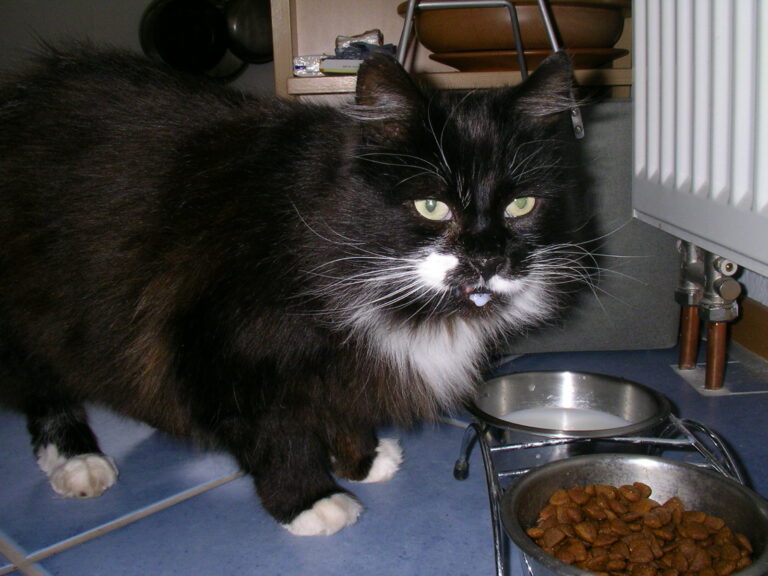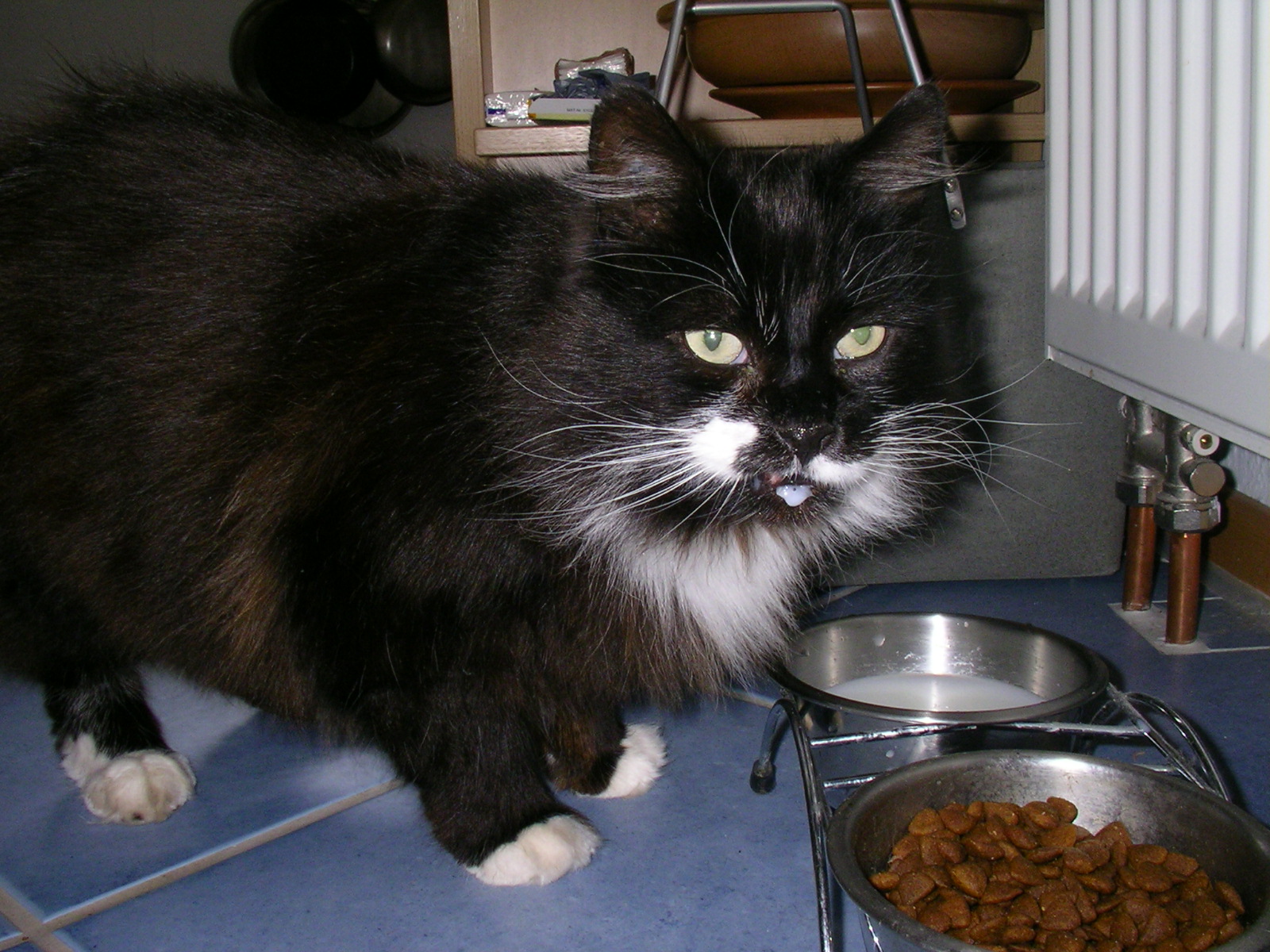
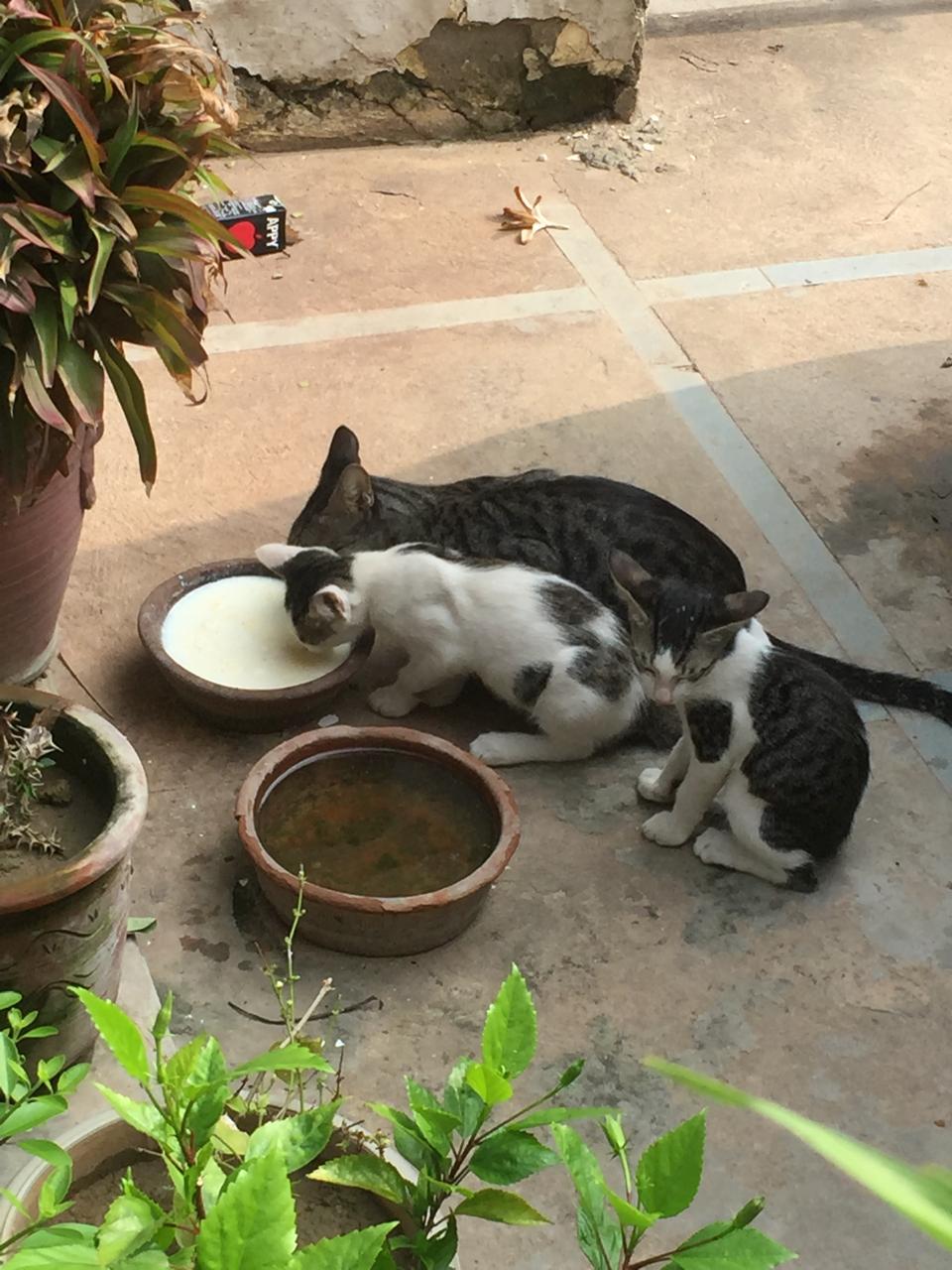
A cat beside bowls of milk and dry food. Photo: Apricum (public domain), via Wikimedia Commons.
The Cartoon Cat and the Saucer of Milk
You have seen it in a hundred cartoons: a happy cat lapping milk from a saucer. Real life is less cute. Many of us picture milk as a treat every cat and dog loves, but vets and animal charities say it is more complicated. Before a carton lands in your cart, here is what to check first.
Some links may be affiliate links; we may earn a small commission.
Why Milk Upsets So Many Pets
Veterinarians quoted by PetMD explain that young pets make high levels of lactase, the enzyme that breaks down lactose, and make less as they get older. The undigested lactose ferments in the gut, causing cramps and diarrhea. Regular milk has the highest amount of lactose among dairy products, PetMD quoted one vet as saying.
Cats Protection, a UK charity, says most adult cats are lactose intolerant. Symptoms appear about 8 to 12 hours after dairy: diarrhoea, which can lead to dehydration, a gurgling stomach, a bloated tummy, extra wind and lethargy. The ASPCA adds that pets do not possess significant amounts of lactase, so dairy can cause diarrhea or other digestive upset.
Dogs are not exempt. PetMD, in an article by Sandra C. Mitchell, DVM, says dogs can be lactose intolerant too, with signs such as vomiting, diarrhea, gas, bloating, abdominal pain and decreased appetite after even a small amount. Dr. Ishpreet Gill, DVM, told PetMD that cats are more likely to have problems, while dairy intolerance is common in adult dogs but does not happen in every dog.
What to Look For on the Shelf
Start with the label and check that it says lactose-free or made for pets. Cats Protection says lactose-free milk or special cat milk “does not contain lactose and won’t make your lactose-intolerant cat unwell.” That solves the lactose problem, but it is where the good news ends. For example, Bulk Bayan, an online bulk grocer, lists Cosi Pet’s Milk Lactose-Free as a lactose-free pet milk. Check the label and the best-before date on any product you consider.
Next, read the ingredients. Scan for sugar, sweeteners and flavourings. PetMD says milk alternatives often have added sugars or sweeteners, “some of which (such as xylitol) may actually be toxic.” The ASPCA says xylitol can cause low blood sugar and potentially liver damage. Early signs include vomiting, lethargy and loss of coordination, progressing to seizures. The ASPCA advises contacting a veterinarian or poison control if a pet eats it.
What to Avoid
Do not swap in plant milks. PetMD does not recommend almond, oat, soy or coconut milk for dogs, saying they are relatively high in calories and fat.
Do not give puppies cow or goat milk. PetMD says puppies can safely drink dog milk and weaning formulas made for them, but other milks may be too rich in some components and deficient in others. Newborn kittens need their mother’s milk. If they cannot feed from her, Cats Protection says a specially made substitute kitten milk can be hand-fed, and owners should speak to a vet about orphaned kittens.
And skip the worm myth. Dr. Gill told PetMD there is no truth in the claim that milk causes worms in cats.
How Much Is Safe? Think Treat, Not Meal
No vet source we checked gives a set amount, so ask your vet for a number. In general terms, treat milk as a treat. VCA Animal Hospitals says, “Treats should not exceed 10% of your pet’s energy/calorie intake. So targeting 5% is a safer bet.”
Calories add up fast. Cats Protection warns these products contain a lot of calories that could cause weight gain, and lack nutrients cats need. PetMD says milk’s fat, sugars and calories can lead to obesity and pancreatitis in dogs when consumed in large amounts. Cats Protection’s bottom line: “It is best to avoid giving your cat any type of milk.”
Water stays the main drink. PetMD calls it the best, safest way to hydrate a dog, and Cats Protection says it is the best thing for adult cats to drink. Dogs also get protein and calcium from a well-rounded commercial diet already.
Introduce Slowly and Watch Closely
If you and your vet decide to try it, go slowly. Dr. Gill recommends watching for GI trouble after even the smallest amount. PetMD advises: “If these signs are severe or persist more than 12 hours, contact your veterinarian for advice.”
Your Quick Vet-Check Note
General information only, not veterinary advice. Dr. Gill recommends talking to your veterinarian before giving milk or dairy. We would add that puppies, kittens and pets with health conditions deserve a vet’s okay first.
Your shopping checklist: confirm the label says lactose-free or made for pets, scan for sugar, sweeteners and flavourings, skip plant milks, count it toward the treat limit, and keep water first. If you decide to buy, you can browse the pet section at Bulk Bayan. Start small and stay alert.
About the Author