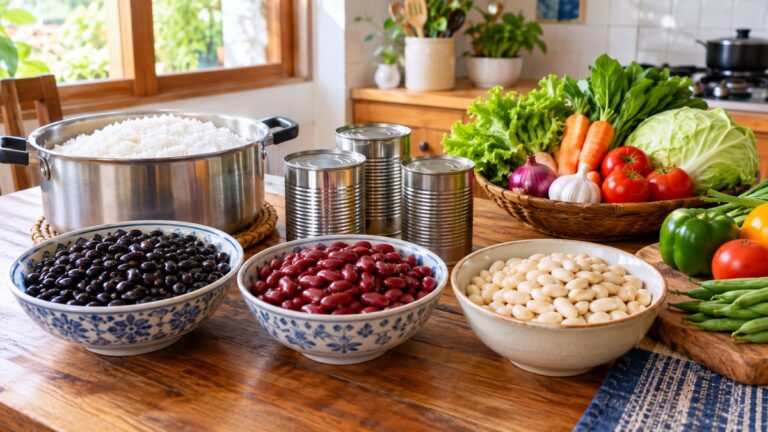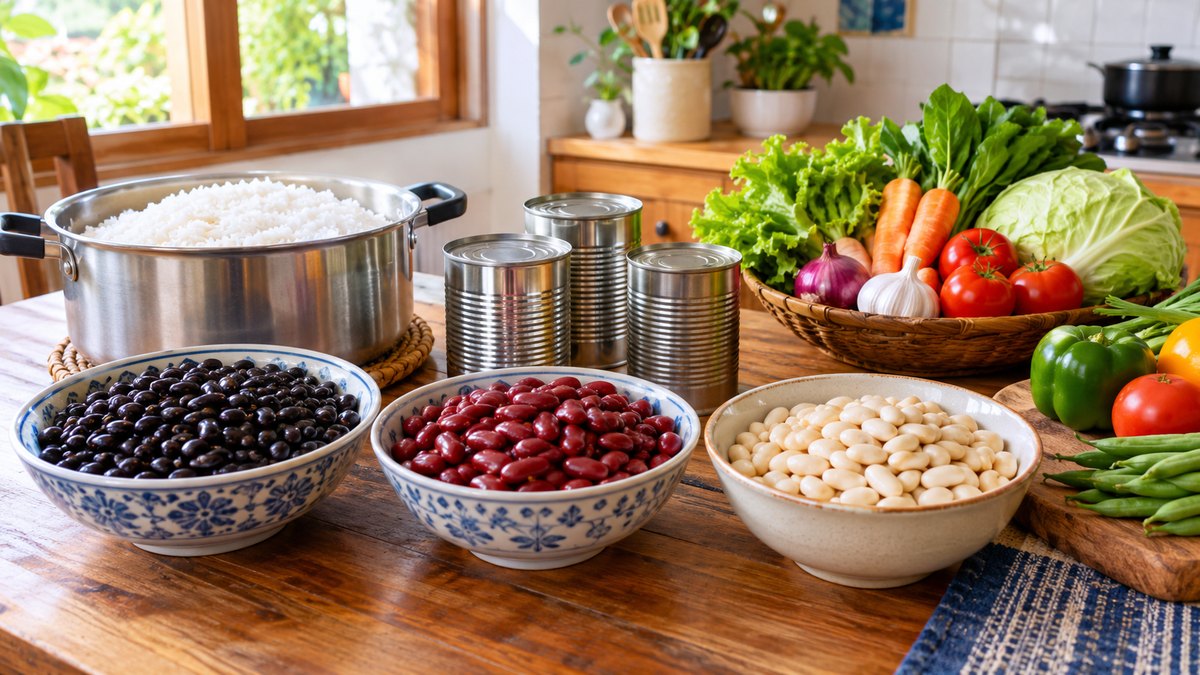
Canned beans are one of the simplest ways to add plant-based protein to the table. They need no soaking and no long simmering, so they suit busy kitchens and small stalls alike. This guide covers why beans earn a place in the pantry, what to check on the can, how to use them in familiar Filipino dishes, how to store them, and how small resellers can handle stock responsibly.
Why Beans as Budget Protein
According to the Harvard T.H. Chan School of Public Health, legumes are a nutritious staple of diets around the world, and an inexpensive source of protein, vitamins, complex carbohydrates, and fiber. Pulses include beans, lentils and peas.
A few points from the same source are worth knowing:
- Legumes in their whole unprocessed form are low in saturated fat and sodium.
- Their fibers may help lower blood cholesterol and may prevent sharp rises in blood sugar.
- Legumes have a low glycemic index, are high in fiber, and contain slow-digesting resistant starch. Research on preventing type 2 diabetes is mixed and not definitive.
- Protein and fiber may increase feelings of fullness. A NHANES study of 8,229 adults found that people who ate beans had lower body weight and smaller waist size than people who did not.
- Because of their “meaty” texture, legumes can stand in for animal-based protein in a variety of preparations, and their neutral flavor blends with many seasonings. They are also described as relatively sustainable and inexpensive.
Dietary guidance also emphasizes them: the U.S. Dietary Guidelines suggest about 3 cups a week, and the DASH Eating Plan suggests 4-5 half-cup servings a week.
What to Check on the Label
The Harvard description applies to legumes in their whole, unprocessed form. Canned products can differ, so read the label on the can you actually receive. The U.S. FDA’s guidance on the Nutrition Facts label gives a sensible order of checks.
1. Servings and Serving Size
Check servings per container and serving size first. All nutrient amounts on the label, including calories, refer to one serving. Serving size is not a recommendation of how much to eat. If you eat two servings, you get two times the calories and nutrients.
2. Sodium
The FDA lists sodium among the nutrients to get less of, noting that too much sodium is associated with increased risk of high blood pressure and cardiovascular disease. Compare the sodium line between cans, and use the Percent Daily Value to help compare products.
3. Added Sugars
Added sugars are also a nutrient to get less of. The word “Includes” before Added Sugars means they are counted within Total Sugars.
4. Ingredient List
Tip: a short ingredient list is easier to understand at a glance. Read it before buying, especially if anyone in the household has dietary restrictions.
5. Best-Before or Expiry Date
Find the date and make sure there is enough time left for how quickly you will use the can.
6. Can Condition
Avoid cans with deep dents, bulging, rust, or leaks. When in doubt, leave it out.
How to Use Beans in Filipino Meals
These are suggestions rather than rules. Ready-to-eat beans can be heated or added straight to a recipe, so they fit easily into everyday cooking.
- Ginisa dishes: stir beans into tomato-based ginisa dishes near the end of cooking so they just heat through.
- Sopas: add a scoop for extra body and texture.
- Ginisang gulay: toss beans in with sautéed vegetables for a more filling plate.
- Rice toppings: serve beans over hot rice with itlog na maalat and kamatis.
- Salads: mix with chopped fresh vegetables and a simple dressing.
- With tuna or sardines: combine beans with canned fish for a quick, filling meal.
Tip: if you want less sodium, rinse and drain the beans before using them.
Storage
These are general food-safety tips. Always follow the instructions printed on the can label.
- Unopened cans: keep them in a cool, dry place away from heat and sun, and off damp floors.
- Opened cans: transfer leftovers to a covered container, refrigerate, and use within a few days. Never store beans in the open can.
Tips for Small Resellers
If you resell canned goods in a sari-sari store, market stall, or online, a few habits protect both your customers and your reputation. These are common-sense tips, not statistics.
- Check best-before dates on every case, not just the first one you open.
- Rotate stock first-in-first-out so older cans are sold first.
- Offer variety: stocking black, red, and white beans lets customers choose what suits their cooking.
- Inspect cans at receiving for dents, bulging, rust, or leaks, and set aside any that look doubtful.
- Do not over-promise health claims. Repeat the label facts accurately and let customers read the nutrition panel themselves.
Quick Comparison
The three products below are 400g cans that the sellers’ pages describe as ready to eat, with no soaking required, and as high in protein and dietary fiber. These are the sellers’ own descriptions, so verify the nutrition panel, ingredients, and best-before date on the can you actually receive.
- Molinera Black Beans 400g: smooth texture and a hearty, earthy flavor. Suggested uses include burritos and tacos, rice bowls, chili, stews, soups, and salads.
- Molinera Red Kidney Beans 400g: suggested uses include chili con carne, salads, soups and stews, burritos and tacos, and rice dishes.
- Molinera Natural White Beans 400g: mild flavor and tender texture. Suggested uses include soups, stews, fresh salads, casseroles, and pasta dishes.
A Note on Gas and Bloating
Resistant starches and oligosaccharides in legumes can cause gas, bloating, and cramping in some people when gut bacteria ferment them. Tip: if beans are new to your household, start with a small portion and see how everyone feels before serving more.
Sources
- https://nutritionsource.hsph.harvard.edu/legumes-pulses/
- https://www.fda.gov/food/nutrition-facts-label/how-understand-and-use-nutrition-facts-label
We may earn from links in this guide.
About the Author