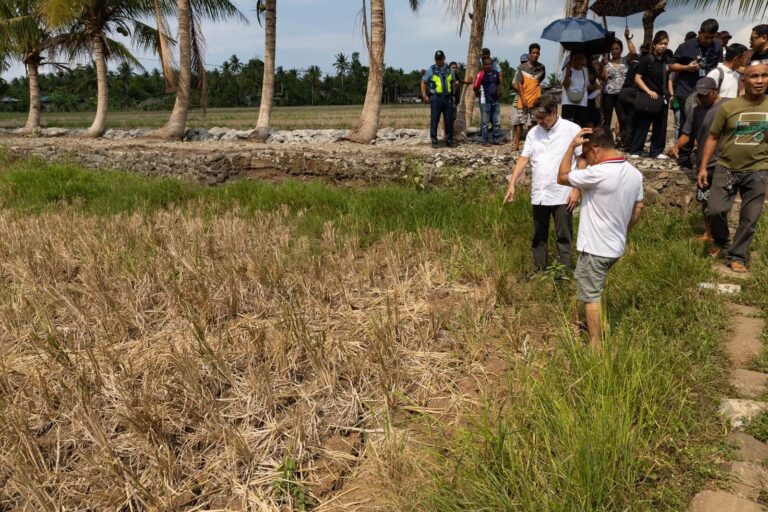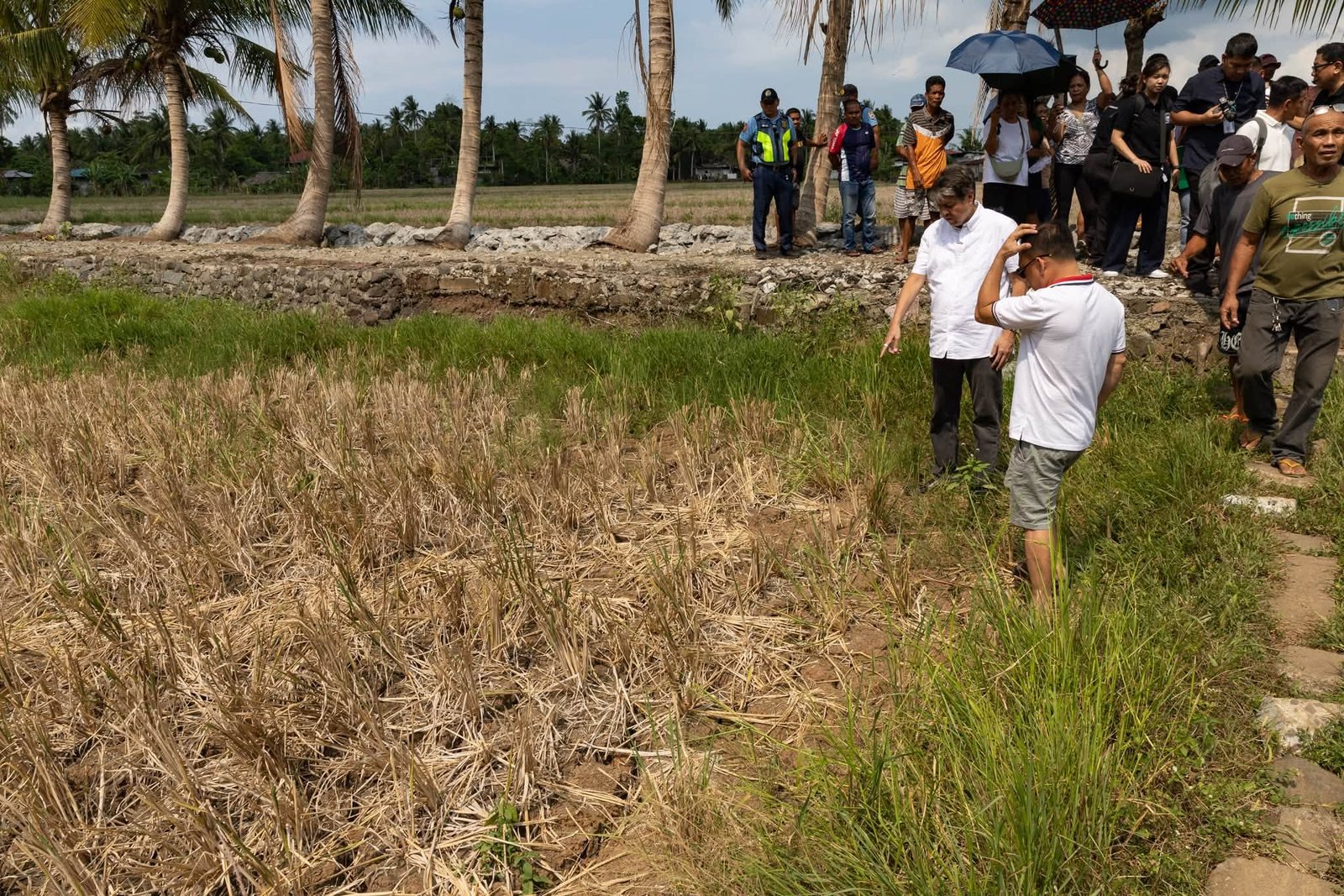
Dry rice fields in Brgy. Comun, Camalig, Albay (May 2026). Photo: Office of Sen. Kiko Pangilinan via Wikimedia Commons (public domain).
Damage and losses to Philippine agriculture from the ongoing El Niño have reached P8.57 billion, according to the Department of Agriculture’s (DA) October 21 bulletin, with 288,058 farmers and 291,154 hectares of farmland affected. Agriculture Secretary Francisco Tiu Laurel Jr. told senators the bill could climb to around P20 billion as a looming “Super El Niño” deepens the dry spell.
The figures, reported by GMA News (October 21, 2026), are still subject to validation. The Philippine Daily Inquirer reported (October 23, 2026) that the total is up 24.7 percent from P6.87 billion in September, with 220,307 metric tons of produce lost.
Which crops and regions are hardest hit?
Corn and rice account for more than 90 percent of the losses. Per the DA data cited by GMA News, corn damage stands at about P5 billion and rice at P2.95 billion. High-value crops such as vegetables, spices, legumes, watermelon, banana and pineapple lost P571.28 million, livestock P37.75 million, and cassava P5 million.
The damage is spread across 14 regions: the Cordillera Administrative Region, Cagayan Valley, Central Luzon, CALABARZON, MIMAROPA, Bicol, Western Visayas, the Negros Island Region, Central Visayas, Eastern Visayas, Zamboanga Peninsula, Davao Region, SOCCSKSARGEN and Caraga.
In the Negros Island Region alone, DA disaster risk reduction chief Marion Tagle said rice losses have reached P35.9 million across 1,338 hectares, with nearly 42 hectares beyond recovery, the Inquirer reported. The damage is concentrated in rain-fed areas, while irrigated fields have reported no losses so far.
How bad could it get?
Speaking before the Senate on Wednesday, Tiu Laurel said losses could reach about P20 billion, with production losses of up to a million metric tons, according to the Inquirer. ABS-CBN News reported (October 21, 2026) that the potential P20 billion in losses could cover some 350,000 hectares.
The Inquirer said 2.8 million farmers and fisherfolk could be affected, rising to 4.6 million in a worst-case scenario. That would surpass the P15.91 billion in damage from the June 2023 to March 2024 El Niño.
“With values up now and [the coming] Super El Niño, losses will be much higher,” Tiu Laurel said, according to ABS-CBN, which quoted him putting the 2023-2024 losses at P16 billion. He added that rice output could fall by 700,000 tons to 1 million tons, on top of the 63,000 tons already lost this year.
For households already feeling higher prices, the El Niño adds to pressure from the BSP’s 50-basis-point rate hike as inflation hit 7.2 percent and the warnings on what a Super El Niño could do to your power bill.
Is there enough rice and food in the meantime?
Tiu Laurel said the country has an “adequate” 80-day rice supply, along with 170 days of pork and 135 days of chicken, ABS-CBN reported. “Ang onion, red onions natin, mayroon tayo hanggang March 2027,” he said. He also described the country’s dams as “near full.”
What is the government doing for farmers?
The DA said its interventions so far total P11.34 billion, including P10.81 billion in production support such as seeds, fertilizer and soil conditioner. The Philippine Crop Insurance Corp. (PCIC) will pay P569.95 million in indemnification to 68,980 farmers, the Inquirer reported. GMA News said 95,841 animals have been distributed to 92 farmer groups and 306 individual farmers, cloud seeding has been carried out with PAGASA, and water pumps have been installed.
The DA has proposed a P61.99 billion El Niño action plan, including P6.2 billion already released under the UPLIFT program. Fuel subsidies for fisherfolk have started, while subsidies for farmers using farm machinery are targeted for the last week of October or November. The department is also fast-tracking solar-powered irrigation and paddle wheels for fishponds.
“More money into small water impounding will really benefit our farmers and fisherfolks,” Tiu Laurel said, as quoted by ABS-CBN.
Will there be a state of calamity?
Not yet. Sen. Francis “Kiko” Pangilinan has urged a declaration of a state of national calamity, which would free up emergency funds, allow price freezes and open no-interest loans for affected farmers, ABS-CBN reported. Senate President Sherwin Gatchalian said the Senate will hold a hearing on El Niño preparations and response. How those funds are released will matter, given the ongoing debate over the Supreme Court ruling on unprogrammed funds in the 2024 and 2025 budgets.
FAQ
How much has El Niño cost Philippine agriculture so far?
P8.57 billion as of the DA’s October 21, 2026 bulletin, subject to validation, affecting 288,058 farmers and 291,154 hectares.
How high could losses go?
Agriculture Secretary Tiu Laurel told the Senate losses could reach about P20 billion, which would exceed the roughly P16 billion lost in the 2023-2024 El Niño.
Is the rice supply at risk?
The DA says the country has an “adequate” 80-day rice supply, but warned rice output could drop by 700,000 tons to 1 million tons.
Can affected farmers get help?
Yes. The DA is giving seeds, fertilizer and soil conditioner, fuel subsidies and livestock, and insured farmers can claim from PCIC, which is paying P569.95 million to 68,980 farmers.
Sources: Department of Agriculture data as reported by GMA News (October 21, 2026), ABS-CBN News (October 21, 2026) and the Philippine Daily Inquirer (October 23, 2026). Photo: Dry, cracked rice fields in Brgy. Comun, Camalig, Albay, during a May 2026 visit by Sen. Kiko Pangilinan’s office, via Wikimedia Commons (public domain).
About the Author