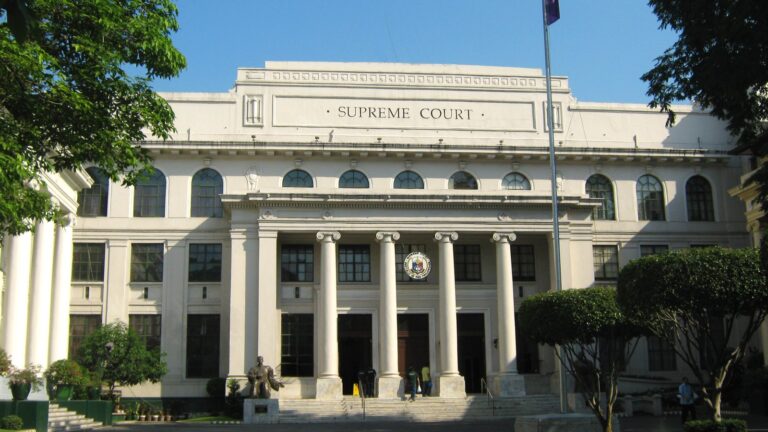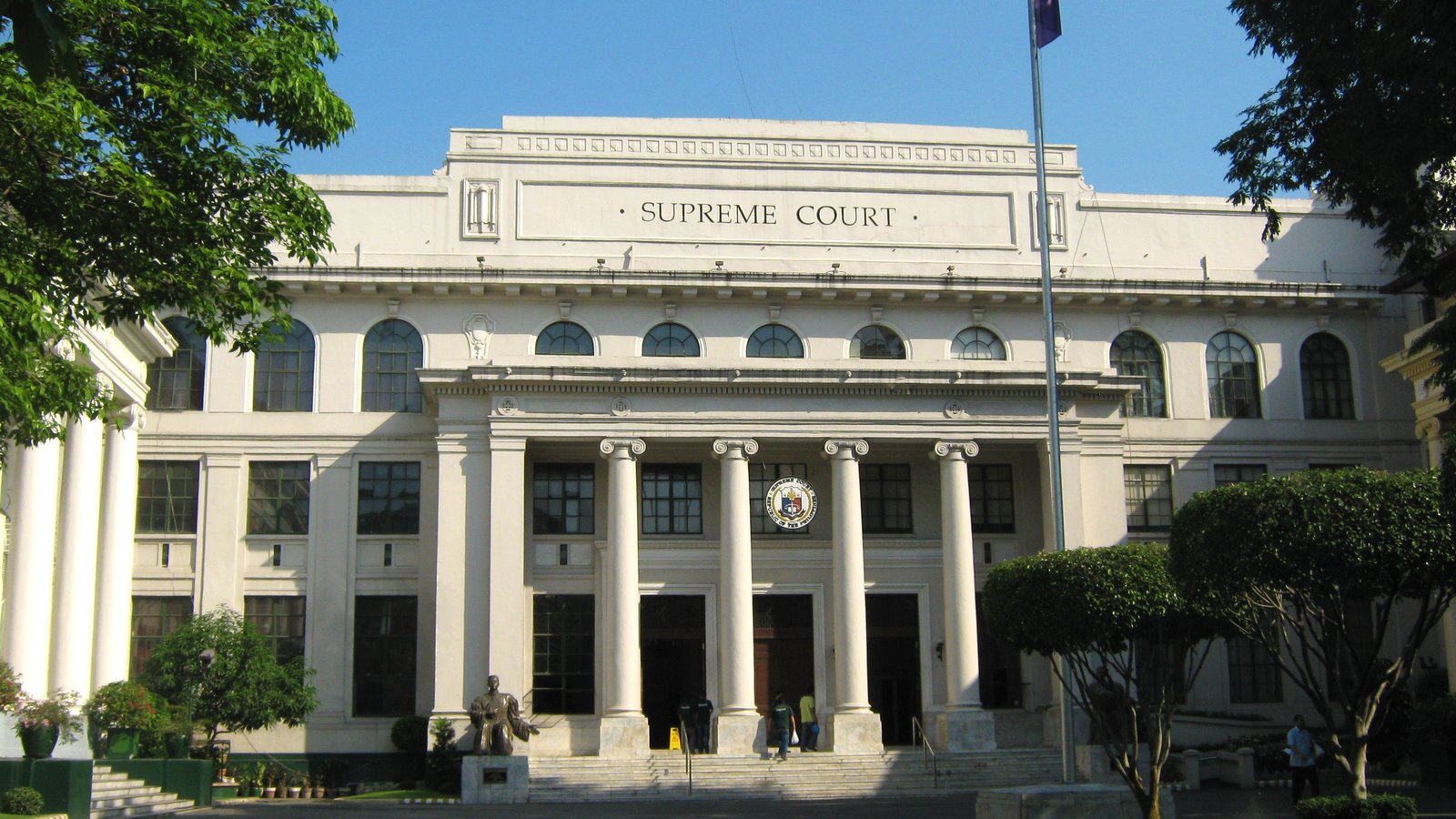
Supreme Court of the Philippines, Manila. Photo: Mike Gonzalez (TheCoffee) via Wikimedia Commons, CC BY-SA 3.0
Malacañang said on Wednesday, October 21, 2026, that it will ask the Supreme Court to reconsider its ruling that declared the 2024 and 2025 General Appropriations Acts unconstitutional over increases Congress made to the President’s proposed budget. The Office of the Solicitor General has been tasked to file the motion for reconsideration, Palace Press Officer Undersecretary Claire Castro said in a press briefing, according to GMA News.
The decision, penned by Senior Associate Justice Marvic Leonen and released by the SC En Banc, also voided two provisions of the 2026 budget that allowed the use of unprogrammed, or standby, funds. Here is what the Court said and what the Palace objects to.
What did the Supreme Court strike down?
According to the SC statement reported by GMA News (Oct. 20) and Philstar.com (Oct. 21), the Court ruled on three budgets:
- 2024 GAA (Republic Act 11975): declared unconstitutional because the Bicameral Conference Committee raised unprogrammed appropriations by ₱449.5 billion, from the ₱281.9 billion in the President’s National Expenditure Program to ₱731.4 billion in the final law.
- 2025 GAA (Republic Act 12116): declared unconstitutional over a ₱17.99-billion increase to the DPWH Special Road Fund. The Court also said a ₱12.75-billion increase in Special Accounts in the General Fund violated the Administrative Code.
- 2026 GAA: Special Provisions 1(a) and 1(b), Chapter XLIII, which authorized unprogrammed appropriations, were voided. The Senate, the House, the Office of the Executive Secretary and the DBM are permanently barred from implementing them.
The Court said Congress cannot raise the President’s total recommended appropriations, and that this ceiling covers programmed and unprogrammed items together. “Congress severely distorted the budget creating artificial fiscal space in the programmed appropriations,” the SC statement said, as quoted by GMA News.
What is SAGIP, and why did the Court call it a lump sum?
The ruling also struck down SAGIP, or “Strengthening Assistance for Government Infrastructure and Social Programs,” an item in the 2024 and 2025 unprogrammed funds. The Court called it a prohibited lump-sum appropriation under the Belgica v. Ochoa pork barrel ruling, because specific projects were identified only after the budget was passed. GMA News quoted the Court describing SAGIP as a “covert repository of lump sum allocations for DPWH infrastructure like flood control projects.”
Related: Villar jumps to the Senate majority and reclaims the public works gavel.
Why is Malacañang asking the SC to reconsider?
Castro said the Palace “respectfully disagrees” with parts of the decision. She objected to the rule that standby funds may be tapped only when total collections exceed the total revenue target. In her view, as reported by GMA News, that condition amounts to the Court rewriting terms that Congress, the branch the Constitution tasks with writing the budget, had set. “Magalang nating hinihiling sa Korte Suprema na muling suriin ang kanilang desisyon,” she said (We respectfully ask the Supreme Court to carefully review its decision).
When the case was filed in 2024, Budget Secretary Amenah Pangandaman said the standby items were “not unconstitutional” because they are released only if revenue triggers are met, PNA reported.
Who could be held liable?
Under the doctrine of operative fact, completed projects and good-faith beneficiaries are protected, but not the people behind the provisions. “These officials remain subject to criminal, civil, and administrative liability unless the proper tribunals explicitly find that they acted in good faith,” the Court said, as quoted by Philstar.com. The ruling names no individual as liable, and any case would still have to be filed and proven before the proper body.
The Court also noted that there were no records of the Bicameral Conference Committee’s discussions and its report did not explain the changes, GMA News reported. The 2024 petition named then Senate President Juan Miguel Zubiri and then Speaker Ferdinand Martin Romualdez as respondents for Congress.
The 121-page decision, the Inquirer reported, granted petitions led by the late Albay Rep. Edcel Lagman and, in part, by former Sen. Aquilino “Koko” Pimentel III (2024 budget), the Filipinos for Peace, Justice and Progress Movement (2025) and Reps. Edgar Erice and Leila de Lima (2026).
What happens next?
The OSG will file the motion for reconsideration. Until the Court acts, the ruling stands. The Court did not ban standby funds outright. It set four conditions: no lump sums, clearly separated rules for using new revenue, priority standards when funds have several purposes, and staying within the national fiscal program, according to the Inquirer.
Senators are already scrutinizing the 2027 budget, including drought aid. See Super El Niño and your power bill: what DOE and senators are warning about. For another recent high-court case, read how the Supreme Court junked challenges to the 14-vote conviction rule, and follow VP Sara Duterte’s trial in our live impeachment trial hub.
FAQ
Are unprogrammed appropriations now illegal?
No. The Court said they are not unconstitutional in themselves, but they need clear limits and safeguards.
Will finished projects under the 2024 and 2025 budgets be undone?
No. Under the operative fact doctrine, irreversible programs and good-faith beneficiaries are protected.
Is the ruling final?
Not yet. Malacañang said the OSG will file a motion for reconsideration.
Sources
- GMA News, Oct. 21, 2026 (Palace reaction)
- GMA News, Oct. 20, 2026 (SC statement)
- Philstar.com, Oct. 21, 2026
- Inquirer.net, Oct. 2026
- Supreme Court case page, G.R. Nos. 271059 and 271347
- Philippine News Agency, 2024 (DBM position)
About the Author