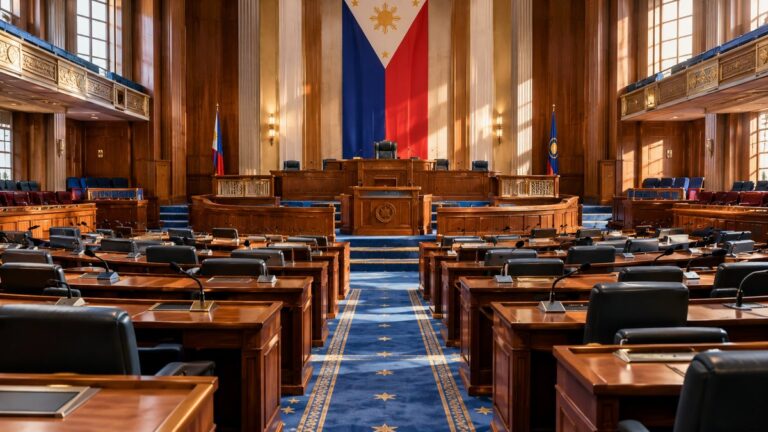
The Supreme Court has approved amendments to the Rules of Court that streamline the process for Filipino spouses seeking Philippine judicial recognition of foreign divorces. The report comes from Ian Laqui of Philstar.com, dated October 8, 2026. According to Philstar.com, the Court acted in its En Banc session on October 7.
The headline change is simple to state. Petitioners no longer have to independently prove the foreign divorce law in court. They need only establish that the divorce decree was issued. For Filipino families, especially those with a member working overseas, that could mean fewer documents to chase and fewer obstacles between a foreign decree and a Philippine court’s recognition of it.
The Court also drew clear lines around what has not changed. This explainer covers both sides.
What Changed
No more proving the foreign law on your own
Under the new rules, the requirement that petitioners independently prove the foreign divorce law in court is eliminated. Instead, the petitioner’s task is to establish that the divorce decree was issued. In plain terms, the decree itself now carries more of the weight, and the petitioner no longer has to build a separate case around the foreign statute behind it.
A new presumption under Rule 39
A newly introduced provision under Rule 39 sets up a legal presumption. A foreign divorce obtained between a Filipino and a foreign spouse is presumed to be absolute. It is also presumed to allow the foreign spouse to remarry under foreign law. The one exception is when the decree explicitly says it is a limited divorce.
The burden of proof shifts
Under the amended rules, the burden of proof moves to the opposing party. If someone claims that a foreign divorce is not absolute, that person must show it. The petitioner is no longer left to prove the negative.
Translations get a presumption of accuracy
English translations of divorce documents are presumed accurate if the translator certifies them under oath. That presumption can be contested with contrary evidence. One example the Court gave is a certified true copy of the foreign divorce law obtained from the central repository of the Office of the Court Administrator (OCA).
What Did Not Change
The Supreme Court was explicit that the core legal framework under Article 26(2) of the Family Code remains unchanged. Two points follow from that.
- Filipino spouses must still file a formal petition for judicial recognition in Philippine courts. The amendments streamline the process, but they do not remove the court step.
- Petitions may still be opposed on established grounds. These include lack of jurisdiction, lack of notice, fraud, or clear mistakes of law or fact.
Why the Court Did It
The Court said it introduced the changes after recognizing the significant hurdles Filipino spouses face in proving foreign statutes. Those hurdles fall especially hard on OFWs. Citing Department of Foreign Affairs findings, the Court noted that obtaining official certifications and English translations across varied jurisdictions created unnecessary barriers.
What Families Should Know
Do I still have to go to court?
Yes. The Court said Filipino spouses must still file a formal petition for judicial recognition in Philippine courts. The amendments do not replace that step.
Do I still have to prove the foreign divorce law myself?
No, not independently. The new rules eliminate that requirement. You need only establish that the divorce decree was issued.
What if someone says the divorce was not absolute?
Then the burden falls on that person. Under the amended rules, the opposing party must show that the foreign divorce is not absolute.
What about translations?
English translations of divorce documents are presumed accurate if the translator certifies them under oath. Families should therefore make sure the translation comes with that sworn certification. The presumption can still be challenged.
Can my petition still be opposed?
Yes. Petitions may still be opposed on the established grounds of lack of jurisdiction, lack of notice, fraud, or clear mistakes of law or fact. The streamlined process does not take those defenses away.
The Presumptions Are Disputable
It would be a mistake to read the amendments as an automatic approval. The Court itself said these presumptions are disputable, meaning they may be challenged with contrary evidence under Section 3 of Rule 131.
The Court also pointed to a way to mount that challenge. Under Section 24 of Rule 132, a party may submit a certified true copy of the applicable foreign divorce law, including its English translation, obtained from the OCA. The OCA will maintain a repository of foreign laws.
For families, this means courts and opposing parties still have a say. A judge still decides the petition. An opposing party can still bring evidence. The change is in who has to do the heavy lifting. Opponents must now produce the contrary evidence, where before the petitioner had to prove the foreign law independently.
The Bottom Line
According to Philstar.com’s report, the Supreme Court has removed a costly step for Filipino spouses seeking recognition of foreign divorces. They no longer have to independently prove the foreign divorce law, and a new Rule 39 presumption treats a qualifying foreign divorce as absolute unless the decree says it is limited. The petition requirement, the Article 26(2) framework and the established grounds for opposition all remain in place. For OFW families and others who have had to work through paperwork from several jurisdictions, the practical message is that the court process is meant to be more manageable. It is still a court process.
Sources
About the Author