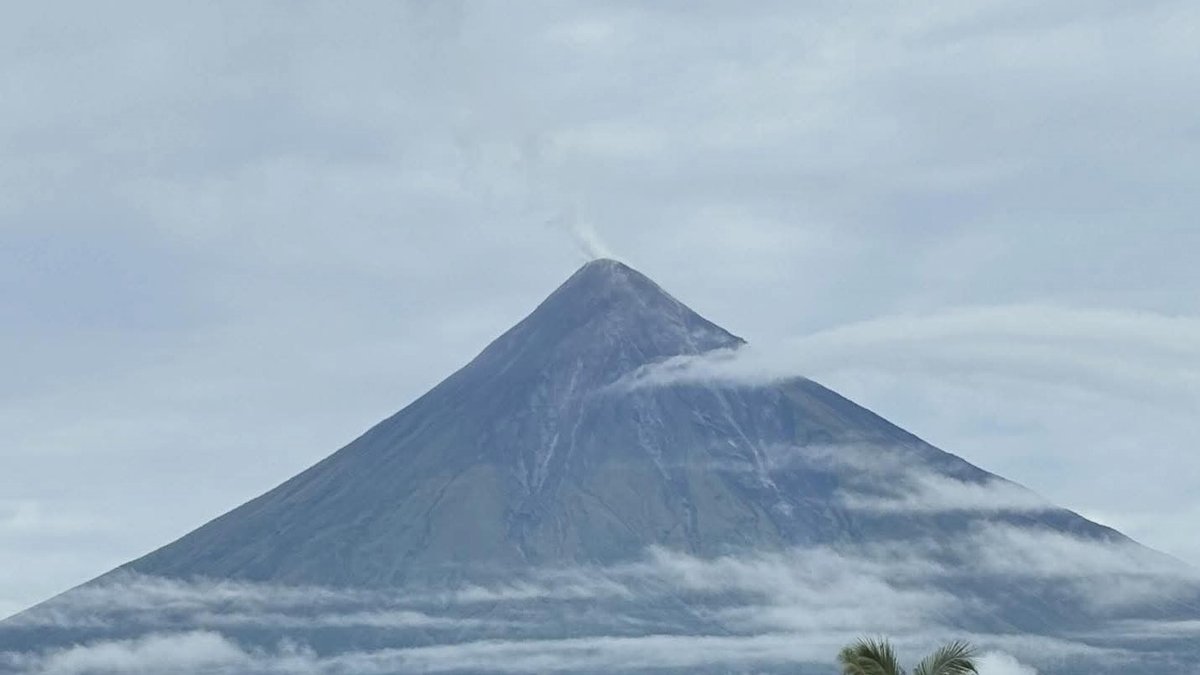
File photo of Mayon Volcano by Buszmail via Wikimedia Commons (CC BY-SA 4.0)
Latest updates
- Oct 30, 2026, 1:15 p.m.: Flights, class suspensions and evacuation counts: none confirmed yet. We have not found a CAAP flight advisory, airline cancellation, DepEd or LGU class suspension, or an official evacuation figure for October 30 confirmed by two sources. We will add them here once PHIVOLCS, CAAP, DepEd or the Albay government announces them.
- Oct 30, 2026, 1:15 p.m.: Danger zone: the 6-kilometer-radius Permanent Danger Zone (PDZ) stays in place, and entry is prohibited (ABS-CBN News, GMA News). PHIVOLCS recommended evacuating areas inside the 6-kilometer PDZ (Inquirer, Bombo Radyo Legazpi). No expansion of the danger zone has been announced. Under the Mayon alert scheme, PHIVOLCS says an extension of the danger zone “in the sector where the crater rim is low will be considered” at Alert Level 3 (PHIVOLCS, GMA News).
- Oct 30, 2026, 11:53 a.m.: Mayon had a moderately explosive eruption that ended at 11:59 a.m. The grayish ash plume rose about 3,000 meters above the crater and drifted west-southwest, PHIVOLCS said. It then raised Mayon from Alert Level 2 to Alert Level 3 (Inquirer, The Manila Times, GMA News, Bombo Radyo Legazpi).
Mayon Volcano in Albay had a moderately explosive eruption at 11:53 a.m. on Friday, October 30, 2026, sending a grayish ash plume about 3,000 meters above the crater, and PHIVOLCS raised the volcano to Alert Level 3. That level means “increased tendency towards a hazardous eruption,” and entry into the 6-kilometer Permanent Danger Zone is off-limits.
The Philippine Institute of Volcanology and Seismology (PHIVOLCS) reported the event in its Mayon Volcano Eruption Notification No. 1, GMA News reported (October 30, 2026). The plume drifted west-southwest. Based on PHIVOLCS data, the Inquirer reported (October 30, 2026) that the eruption ended at 11:59 a.m., lasting nearly six minutes.
What does Alert Level 3 mean for Mayon?
At Level 3, PHIVOLCS says the volcano is in a state of relatively high unrest: frequent volcanic quakes and tremors, sulfur dioxide emissions, rockfalls near the summit, steaming or crater glow, and swelling of the volcano. In plain terms, magma is close to or already at the crater.
PHIVOLCS added that if unrest keeps rising, a hazardous eruption is possible within weeks, and it will consider extending the danger zone on the side where the crater rim is low, according to GMA News.
What are Albay residents being told to do?
Camalig Mayor Carlos Irwin “Caloy” Baldo Jr. posted the PHIVOLCS decision on Facebook shortly after noon and told residents to stay out of the 6-kilometer Permanent Danger Zone, stay home unless they have important business outside, and wear face masks when they go out, The Global Filipino Magazine reported (October 30, 2026). He asked the public to wait for official announcements from local authorities.
As of this writing, no new province-wide evacuation order for October 30 had been reported by the outlets we checked. When Mayon first went to Alert Level 3 this year, on January 6, Albay Governor Noel Rosal ordered the preemptive evacuation of almost 3,000 residents living inside the danger zone, the Inquirer reported in January. Residents should follow their barangay and municipal disaster offices for any new orders.
Basic ashfall safety still applies: cover your nose and mouth with a mask or damp cloth, keep children and older family members indoors, and drive slowly if ash cuts visibility.
Is this Mayon’s first eruption this year?
No. Mayon has been restive for most of 2026. After the January alert, the volcano stayed at Level 3 for months. On May 2, lava collapses sent pyroclastic density currents, locally called “uson,” down its slopes and blanketed at least 52 barangays in Camalig, Guinobatan and Ligao City with ash, GMA Regional TV reported (May 4, 2026). The Office of Civil Defense said more than 30,500 families were affected at the time, the Daily Tribune reported (May 3, 2026).
PHIVOLCS later lowered Mayon to Alert Level 2 on August 5, while warning that the volcano was still pressurized, The Global Filipino Magazine noted. Friday’s eruption puts it back at Level 3 less than three months later.
Will flights and Undas travel to Bicol be affected?
No flight cancellations for October 30 had been reported by the outlets we checked as of this writing. In May, the Civil Aviation Authority of the Philippines (CAAP) barred aircraft from flying up to 11,000 feet within a 6-kilometer radius of the summit, and some flights were canceled, GMA News reported. A similar advisory could follow, so check with your airline before heading to the airport.
The timing matters because many families are going home to the provinces for All Saints’ Day and All Souls’ Day this weekend. If you’re traveling to Albay, read our Undas 2026 guide to dates and travel tips, and keep in mind that November 1 and 2 are special non-working days, so local offices may run limited hours.
Ashfall is also bad news for farms. In May, residents in Camalig reported ash up to 4 centimeters thick on crops, and this comes in a year when El Niño has already caused P8.57 billion in farm damage nationwide. PHIVOLCS has also warned that heavy rain could send lahars down gullies already loaded with this year’s volcanic deposits.
FAQ
Is it safe to travel to Albay this Undas?
Under Alert Level 3, PHIVOLCS advisories say entry into the 6-kilometer-radius Permanent Danger Zone is prohibited, and it recommended evacuating areas inside that zone because of pyroclastic density currents, lava flows, rockfalls and other volcanic hazards. It also told residents to stay alert for lahars and sediment-laden streamflows along channels draining the volcano (Inquirer, citing PHIVOLCS). Before you travel, check the latest PHIVOLCS Mayon bulletin and the advisories of the Albay provincial government and the town you are going to, and follow their instructions.
What does Alert Level 3 mean?
For Mayon, PHIVOLCS defines Alert Level 3 as “Increased Tendency Towards Hazardous Eruption.” Its criteria are relatively high unrest: volcanic quakes and tremor may become more frequent, sulfur dioxide flux increases further, rockfalls occur in the summit area, and there is vigorous steaming or sustained crater glow and persistent swelling of the edifice. PHIVOLCS says this means “magma is close or at the crater. If trend is one of increasing unrest, eruption is possible within weeks. Extension of Danger Zone in the sector where the crater rim is low will be considered.” (PHIVOLCS Volcano Alert Levels)
What time did Mayon erupt on October 30, 2026?
PHIVOLCS said the eruption began at 11:53 a.m. The Inquirer, citing PHIVOLCS, reported it ended at 11:59 a.m.
How high was the ash plume?
About 3,000 meters above the crater, drifting west-southwest, according to PHIVOLCS.
Can people enter the danger zone under Alert Level 3?
No. Entry into the 6-kilometer Permanent Danger Zone is prohibited, and PHIVOLCS may extend the danger zone on the low side of the crater rim if unrest increases.
This is a developing story. Sources: PHIVOLCS Volcano Alert Levels (Mayon), The Manila Times (October 30, 2026), ABS-CBN News (October 30, 2026), Bombo Radyo Legazpi (October 30, 2026), GMA News (October 30, 2026; May 2026), Philippine Daily Inquirer (October 30, 2026; January 2026), The Global Filipino Magazine (October 30, 2026), GMA Regional TV (May 4, 2026), Daily Tribune (May 3, 2026). File photo: Mayon Volcano emitting steam, by Buszmail via Wikimedia Commons (CC BY-SA 4.0). It was not taken during the October 30 eruption.
About the Author